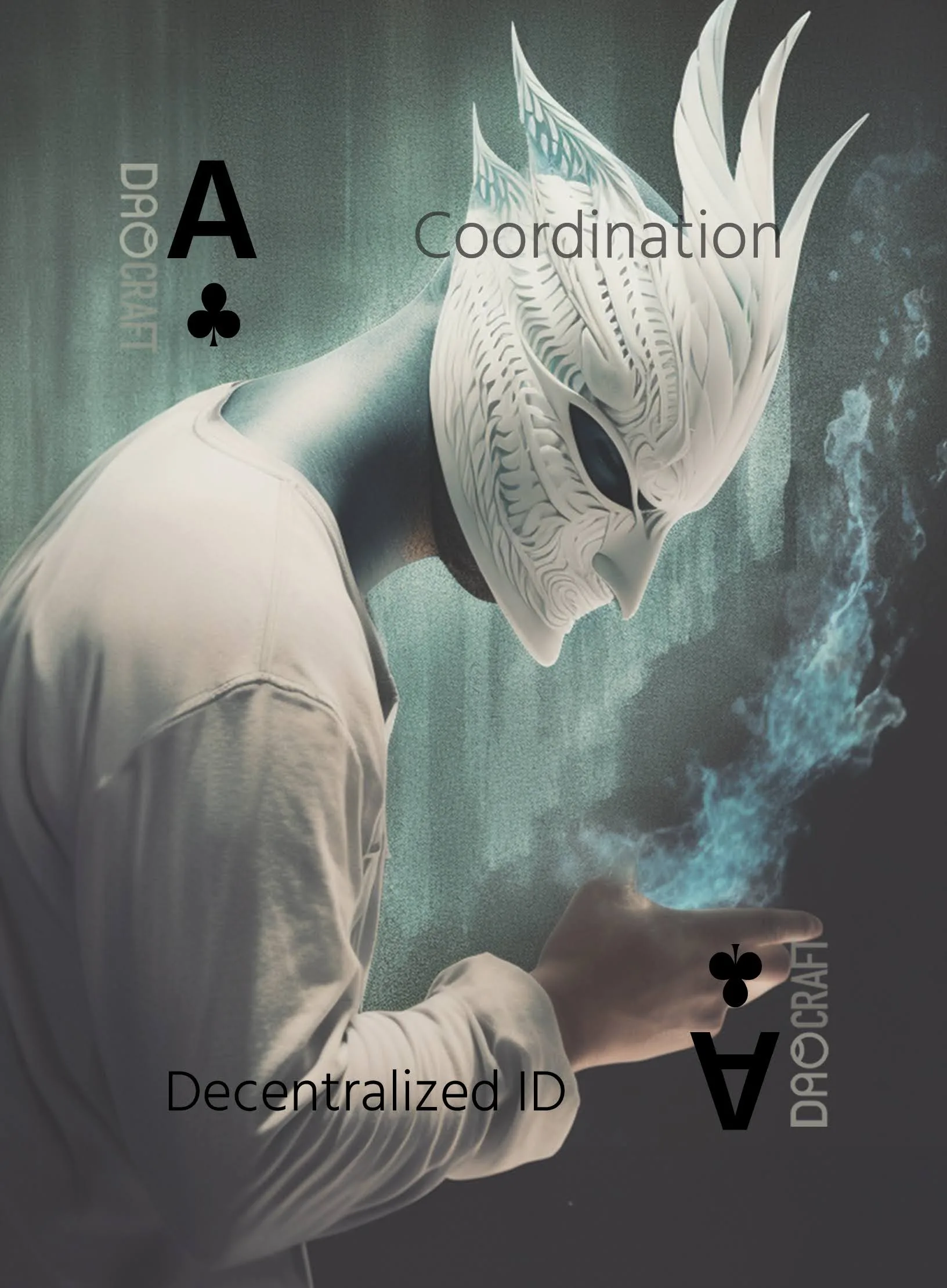
A ♣ · Coordination · Draft
Decentralized ID
An identifier a person creates and controls themselves, with no company or registry able to revoke it.
How it works
A member generates a key pair and publishes the public half as an identifier on a ledger or peer network. The private key stays with the member. When the DAO needs to know who is acting, the member signs a message with that key. Anyone can check the signature against the public identifier. No central registry issues the identifier, so nobody can delete it or hand it to someone else. Credentials and reputation can then be attached to the identifier over time.
Use it when
- You need members to prove who they are without a central login provider.
- Build reputation that follows a member across many DAOs and tools.
- Reduce the risk that one platform ban removes a member from everything.
Watch out for
- A lost private key means a lost identity, with no help desk to recover it.
- One person can create many identifiers, so it does not stop Sybil attacks on its own.
Example
uPort. uPort, started at ConsenSys in 2015, let Ethereum users create self-owned identifiers and sign claims with their own keys before its code became Veramo in 2021.